
Wrought Iron Gate Repair in Houston, TX | Free Inspection
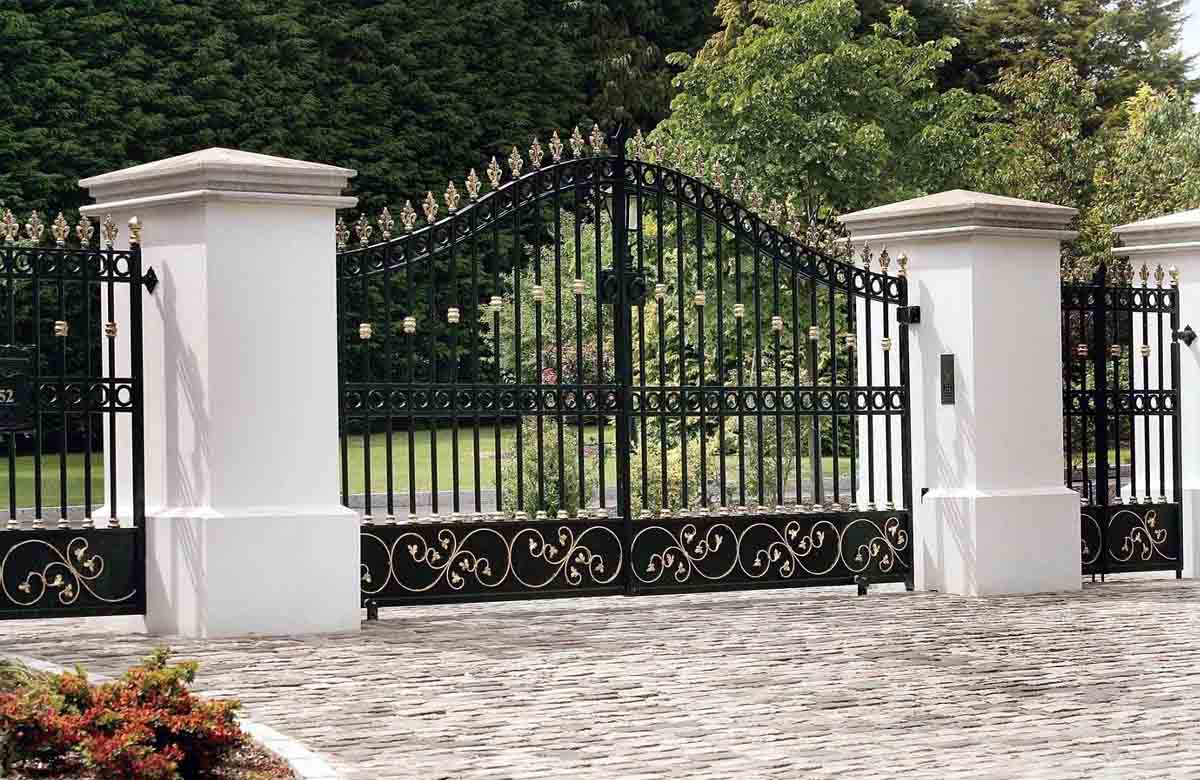

A wrought iron gate that’s rusting, sagging, or won’t close properly isn’t usually a sign it needs replacing; it’s a sign it wasn’t finished or installed correctly for Houston’s conditions in the first place. At Houston Gate Repair, we see this pattern constantly: properly built and maintained, wrought iron is one of the longest-lasting gate materials available, capable of decades of service. Poorly finished or improperly set, it rusts fast and sags at the hinges within a few years. The difference almost always comes down to how it was built, not the material itself.
We repair and restore wrought iron gates across Houston, from decorative residential entries to heavy custom estate gates, matching original patterns and scrollwork rather than defaulting to a full replacement whenever the damage is cosmetic or structural but repairable.
Why Wrought Iron Fails in Houston Specifically
Houston’s clay soil and humidity are harder on iron gates than most climates, and most failures trace back to one of two root causes rather than the metal simply “wearing out.”
Inadequate footings. Clay soil expands and contracts significantly with Houston’s wet-dry cycles, and a gate post set without adequate footing depth will shift over time. This is what causes a gate to gradually go out of alignment, drag on the ground, or stop latching correctly, even when the ironwork itself is undamaged.
Improper corrosion protection. Iron that wasn’t properly primed and finished for humidity will start rusting at welds and joints well before it should, particularly in the first few years after installation. Once rust starts at a structural weld, it weakens that joint specifically, which is often where a “sagging gate” problem actually originates.
Common Wrought Iron Gate Repairs
Rust and corrosion damage. We address surface rust before it spreads, and for structural rust at welds or joints, we grind out the affected area and re-weld rather than patching over a compromised joint.
Sagging and misalignment. Usually a footing or hinge issue, not a sign the gate needs replacing; realigning the post or reinforcing the footing typically resolves it.
Broken welds and cracked scrollwork. Decorative ironwork takes impact damage differently than plain bars; we match the existing pattern when repairing scrollwork so the repair blends into the original design rather than looking patched.
Hinge and hardware wear. Heavy iron gates put more strain on hinges than lighter materials; worn hinges are a common cause of a gate that drags or won’t swing freely.
Automation integration. Older wrought iron gates built before automation was standard can usually be retrofitted with an opener, provided the structure is reinforced to handle the added mechanical load.
Repair vs. Replace: The Real Economics
Full replacement of a custom wrought iron gate is significantly more expensive than repair in almost every case we see, largely because the cost of custom ironwork is concentrated in the fabrication and decorative detail, not the raw material. A gate with surface rust, a cracked weld, or hinge wear is very rarely a replacement-only situation. Full replacement typically only makes sense when the structural frame itself has failed extensively, not when the damage is cosmetic or isolated to a joint or hinge. Homeowners weighing this decision often start by reviewing typical gate repair costs in Houston before deciding between the two.
Wrought Iron Gates in Houston’s Established Neighborhoods
Wrought iron is the dominant gate material in many of Houston’s older, established neighborhoods, where decorative ironwork is often original to the property and part of its architectural character. Restoring rather than replacing preserves that character while solving the underlying mechanical or corrosion issue. We also service the higher-cycle wrought iron community-entry gates common in master-planned developments like those in Sugar Land, where iron gates see far more daily use than a standalone residential entry.
Preventing Future Rust and Wear
A few maintenance habits significantly extend a wrought iron gate’s life between service visits: touching up chipped finish before rust spreads, checking welds and joints during a seasonal walk-around, and keeping hinges lubricated with a silicone-based product rather than an oil-based one. Following a consistent seasonal gate maintenance routine is the single most effective way to catch corrosion before it reaches a structural weld.
Frequently Asked Questions
- Can a rusted wrought iron gate be repaired, or does it need to be replaced?
In most cases, repaired. Surface rust can be treated and refinished, and even structural rust at a weld can usually be ground out and re-welded. Full replacement is typically only necessary when rust has extensively compromised the main structural frame. - Why does my wrought iron gate sag even though the ironwork looks fine?
Sagging is usually a footing or hinge issue, not damage to the iron itself. Houston’s clay soil can shift a post’s footing over time, throwing the whole gate out of alignment even when the ironwork is structurally sound. - Can you match the original pattern when repairing decorative scrollwork?
Yes. We match existing scrollwork and decorative details so a repair blends into the original design rather than looking like a visible patch. - Can an older wrought iron gate be automated?
Usually, yes, provided the structure can be reinforced to handle the added load of an opener. We assess this as part of the initial inspection. - How often should a wrought iron gate be serviced to prevent rust?
Twice a year is typical for residential gates, following the same seasonal gate maintenance schedule recommended for other gate materials.